
Crie uma fonte de receita recorrente para o seu negócio, aumente as vendas e ofereça uma experiência digital completa para seus clientes.
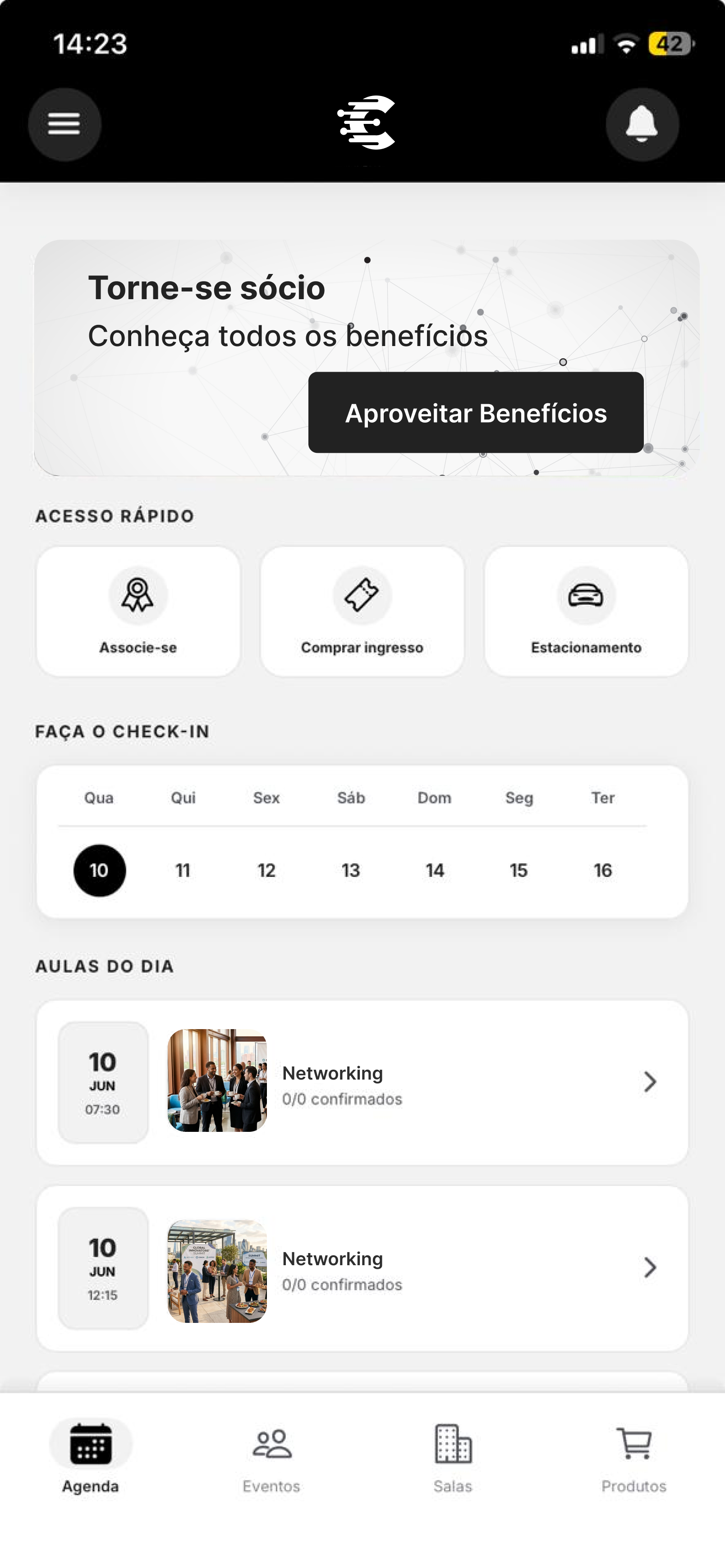
Uma plataforma só: Centralize toda a operação do seu negócio em uma única plataforma. Gestão de sócios, vendas, recorrência, acesso, eventos e experiência digital conectados em um só sistema.
Site & loja, app oficial com a sua marca e um painel de gestão com relatórios em tempo real. Cada módulo funciona sozinho — e melhor em conjunto.
Base de sócios e clientes centralizada, carteirinha digital e comunicação por push segmentado direto no app.
Planos recorrentes com dependentes e limites por plano, cobrança automática no cartão e baixa inadimplência.
Bilheteria e inscrições, loja oficial, bar e estacionamento — todas as fontes de receita no mesmo ecossistema.
Check-in por QR Code em 2 segundos. Integra com a catraca existente ou roda 100% pelo celular do operador — sem maquininha.
Saia das planilhas, do WhatsApp e das anotações. Gerencie todo o seu negócio em um painel simples e intuitivo.
Cadastre, edite e organize ativos e inativos com um histórico centralizado que facilita o relacionamento e a gestão estratégica.
Receita por módulo, top produtos, inadimplência e movimento do dia em live stats — decisão com dado, não com palpite.
Planos recorrentes com dependentes, benefícios e limites de uso por dia, semana ou mês — validados automaticamente no check-in.
Cada cliente recebe uma carteirinha digital personalizada com acesso instantâneo por QR Code para check-ins e validações.
Publicamos um aplicativo exclusivo com a identidade da sua marca, permitindo que seus clientes acessem carteirinha digital, check-in, ingressos, loja, bar e benefícios em um só lugar. Nós cuidamos de toda a infraestrutura, publicação e manutenção para que você foque apenas no crescimento do seu negócio.
Clube de Santa Catarina, integrou os 14 módulos da plataforma e digitalizou toda a operação de sócio, bilheteria e dia de jogo — colocando o clube na palma da mão do torcedor.
"O torcedor voltou a se sentir parte da história do clube — e isso se refletiu nas arquibancadas, na participação digital e em novas fontes de receita."

Do clube de futebol ao clube de assinatura, o Conecta Sócio evolui conforme a sua necessidade — relacionamento e recorrência para qualquer modelo.
Cada módulo da plataforma é uma oportunidade de aumentar receita, fidelizar clientes e fortalecer seu negócio.
Mensalidade de sócio e dependentes — a base do caixa saudável. Cobrança automática, baixa inadimplência e previsibilidade.
Ingressos avulsos, combos e setores com preço dinâmico. Venda 24/7 online ou na porta — mais ticket médio, menos fila.
E-commerce oficial com cupom, frete e produtos exclusivos para sócio. Recuperação de carrinho e recompra automática.
Voucher digital por jogo, controle 18+, estoque por evento. Antecipa receita e elimina filas no balcão.
Vaga avulsa, vip ou benefício do plano. Receita extra por jogo — integrada ao check-in e sem overbooking.
Camarotes, salas, espaços e experiências. Aluguel digital com agenda inteligente — monetize o que você já tem.
Recuperação de carrinho, recompra e push segmentado. Ative clientes dormentes e incremente a frequência.
Ofereça diferentes níveis de assinatura com benefícios exclusivos, acesso prioritário e experiências especiais. Aumente o ticket médio e incentive upgrades de plano.
Uma operação 100% digital reduz custos, elimina processos manuais e permite acompanhar indicadores ambientais de cada evento ou operação em tempo real.
Ingressos, vouchers, carteirinhas, recibos e relatórios — tudo digital. Zero cupom fiscal em papel a cada evento.
Inscrição online elimina viagens extras ao guichê. Menos CO₂ por venda — redução estimada de até 68% em deslocamentos.
Relatórios de sustentabilidade por evento: CO₂ evitado, papel economizado, carteirinhas físicas dispensadas e eficiência operacional.
Menos impressões, menos processos manuais e menos retrabalho. Uma operação digital mais eficiente e econômica.
Cobrança recorrente automática com API moderna e segura. Boleto, Pix e cartão em um fluxo unificado e conciliado — você configura conforme a necessidade do seu negócio.
Cobranças recorrentes debitadas automaticamente no cartão, garantindo fluxo de caixa contínuo.
Boleto, Pix e cartão de crédito em um fluxo unificado e conciliado dentro da plataforma.
Movimente o dinheiro recebido com facilidade, direto pela conta integrada ao sistema.
Integração estável e protegida, configurável de acordo com as regras do seu negócio.
Recursos exclusivos que vão além de um sistema de cobrança — pensados para profissionalizar a operação inteira do seu negócio.
Sem maquininha, sem comodato. O celular do operador faz check-in e resgate de voucher. Integra com catraca existente ou dispensa o hardware.
IA treinada com a base do seu clube ou espaço: atende 24/7 no app ou WhatsApp oficial, tira dúvidas, vende ingresso e renova plano — com respostas auditadas.
Cadastre aulas, turmas, cultos ou eventos uma vez: a plataforma gera toda a grade do trimestre, com limites por plano validados no check-in.
Splits independentes por módulo, por reserva e até por patrocinador de evento — cada centavo separado no momento do pagamento, sem conciliação manual.
Empresa de tecnologia pioneira em desenvolvimento de software sob demanda, integrações e aplicativos personalizados. Há 20 anos atendendo empresas de diversos setores com inovação e soluções adaptáveis.
Acreditamos que a tecnologia é a grande aliada para o crescimento das empresas.
Fale com um especialista e veja como transformar seu público em receita recorrente com uma plataforma e um app com a sua marca.